
Student Highlights: Nancy Weinheimer
— MEET NANCY —
Class: Graduate
Major: Geology
Originally from Reading, Pennsylvania (yes like the railroad in Monopoly!), Nancy Weinheimer was always interested in being outside and understanding the natural environment better to protect it. She discovered her passion for geoscience research while an undergrad at Penn State. Dabbling as an undergraduate technician on three different projects, she realized she was very interested in understanding surface processes, particularly where and how soil can persist in steep mountain landscapes.
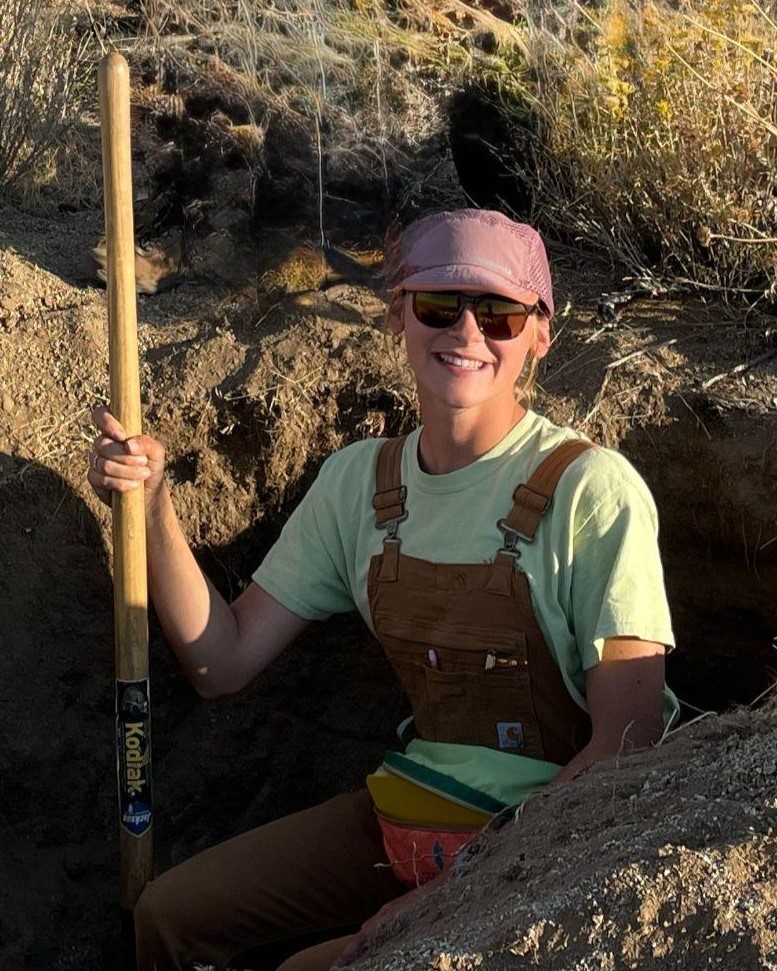
Since becoming a graduate student, she has also discovered her excitement for STEM outreach as an Outreach Assistant for the Science Initiative Roadshow. This opportunity has allowed her to travel all over Wyoming leading activities such as mineral identification, weathering and erosion lessons, and Wyoming geography activities.
— NANCY’S RESEARCH —
Overall, Nancy’s research investigates the balance between soil production and erosion in landscapes that are adjusting to changes in tectonics, climate, and land use. She uses a variety of techniques, including isotope geochemistry, near-surface geophysics, and topographic mapping. The isotope geochemistry allows her to determine the rates of soil production and erosion because we know the rates of isotope production around the world and we can measure the concentration of isotopes at a site.
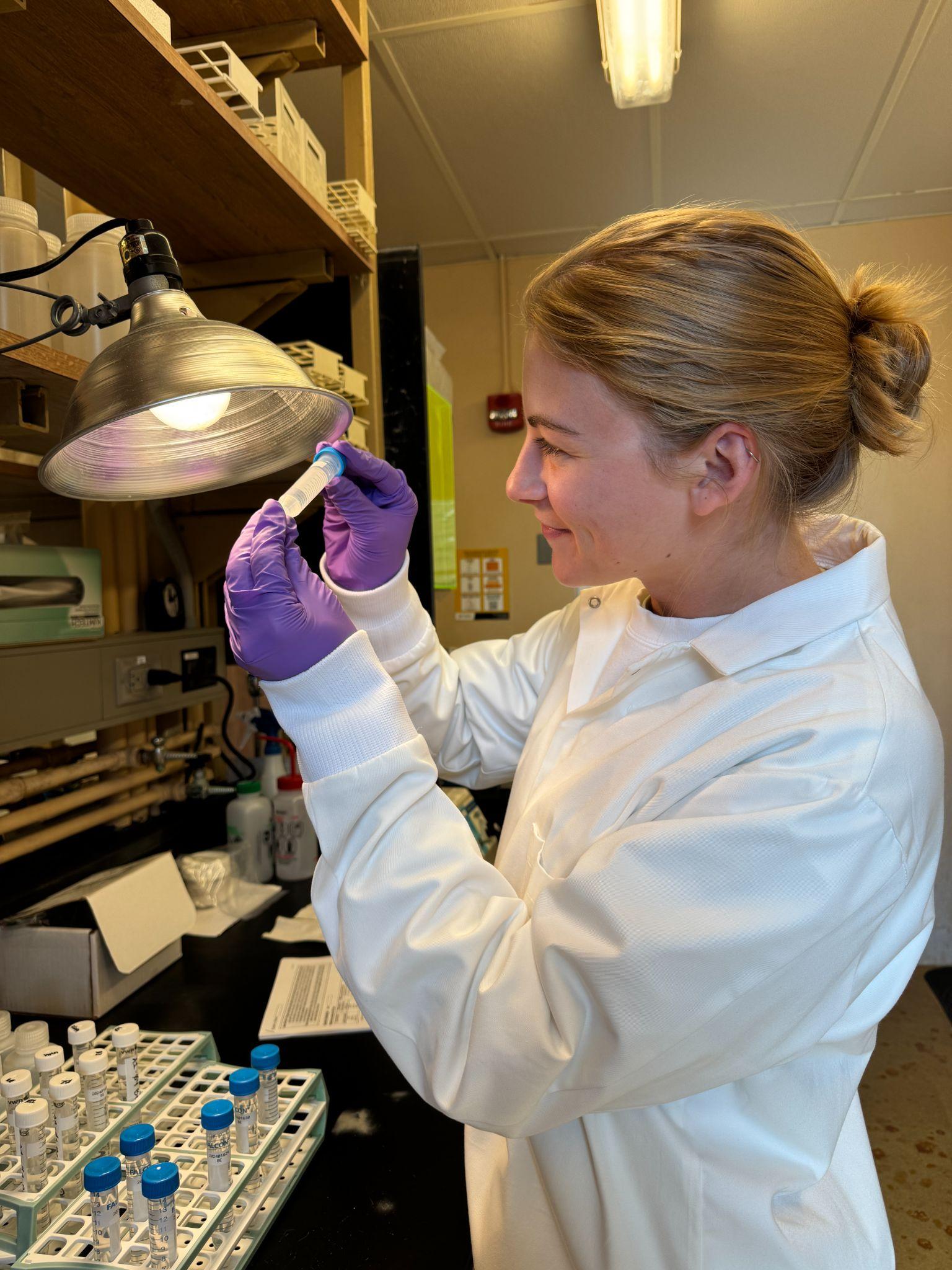
Checking the yield of beryllium from her soil sample. She uses the isotope 10Be to determine rates of soil production and erosion.
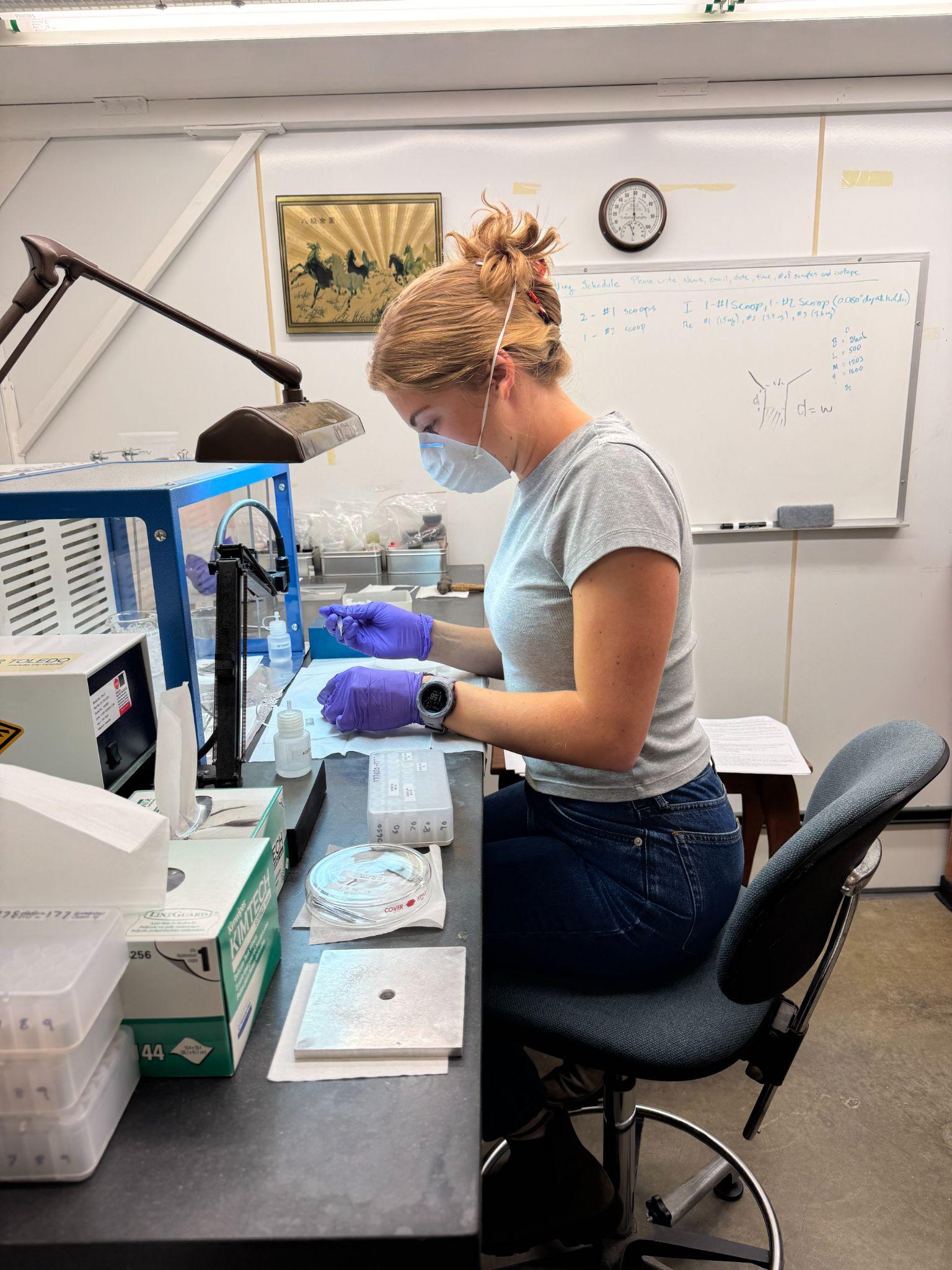
Packing beryllium into teeny tiny targets that will be used in the accelerator mass spectrometer at Purdue University to measure the ratio of 9Be/10Be
The near-surface geophysics, and specifically seismic refraction surveys, allow Nancy to build an image of the subsurface structure, much like how an MRI can image the inside of your body! Mapping the topography and surface cover, such as the distribution of boulders across a landscape, allows Nancy to relate the subsurface data to what we see at the surface and determine how they might be influencing each other. Altogether, these techniques provide a more complete picture of how soils build up, erode away, or persist over time in changing landscapes.
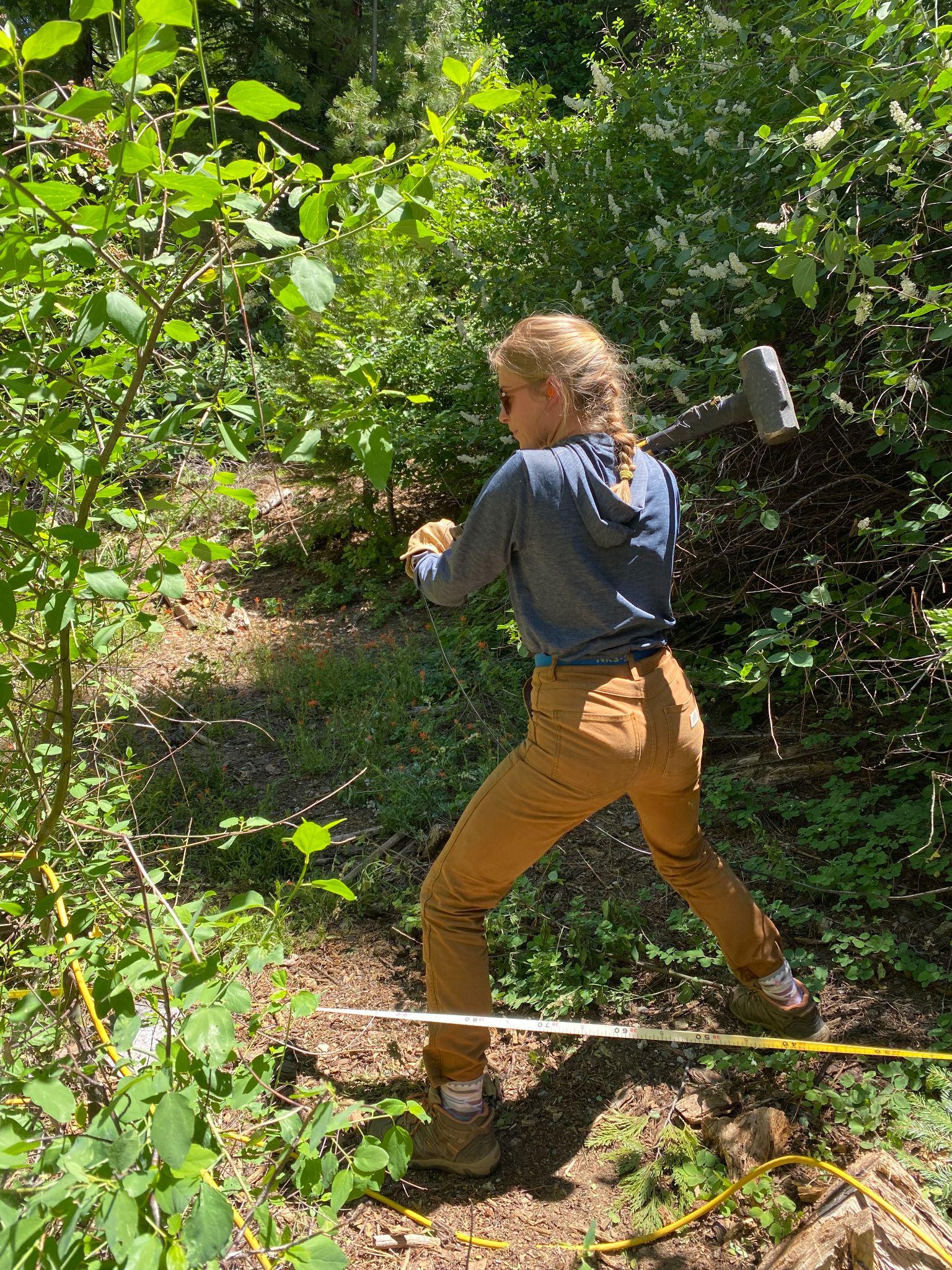
Swinging a sledgehammer to induce motion underground for measuring seismic waves and building an image of the subsurface
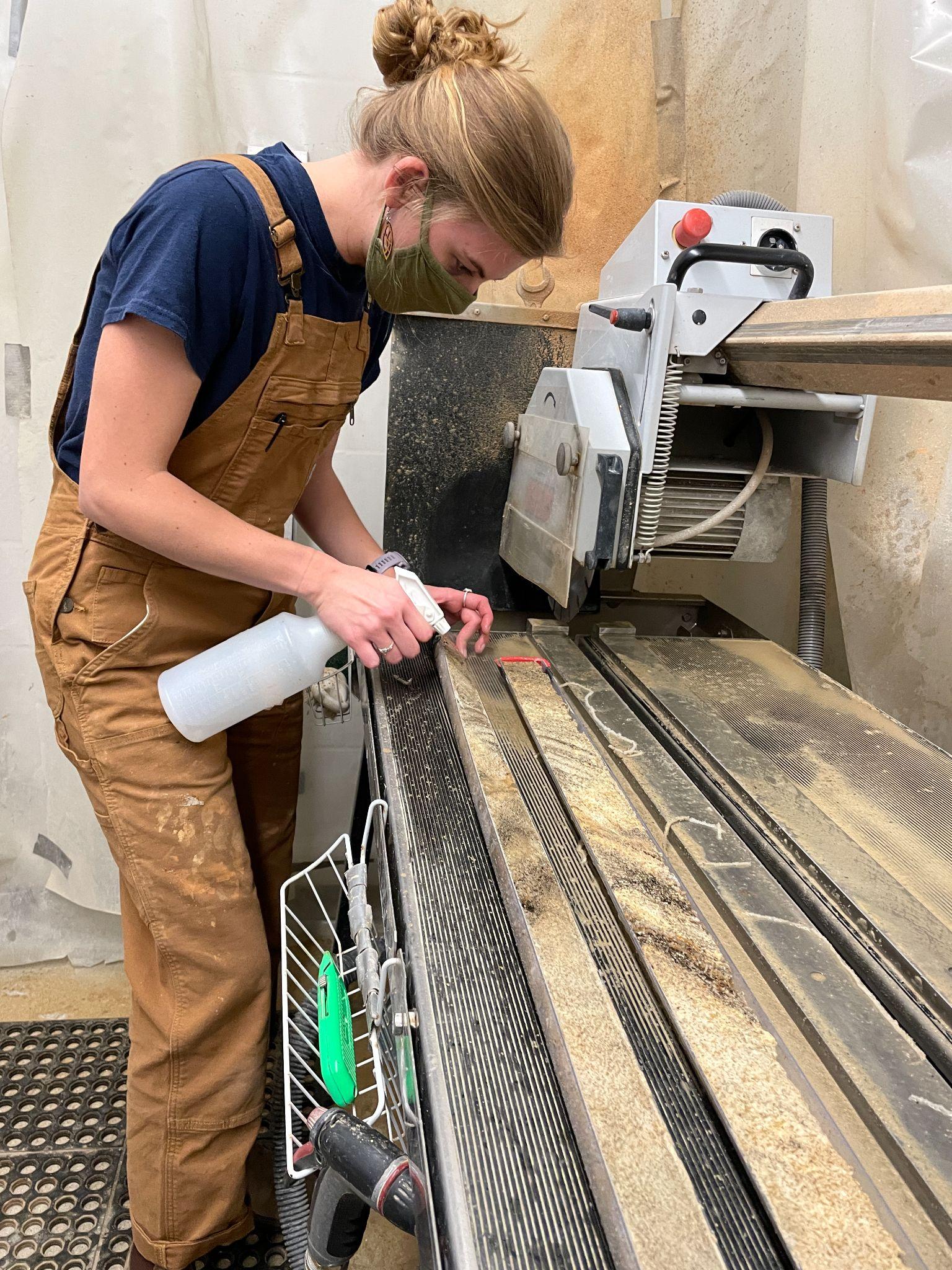
Cleaning the surface of a core of soil and weathered rock to sample for measuring its geochemistry and isotope concentrations
ABOUT STUDENT HIGHLIGHTS
Every year, we award fellowships to graduate and undergraduate students attending the University of Wyoming or Wyoming’s community colleges in order to provide them with funding to engage in real-world research opportunities. Occasionally, we feature one of these students and their research on this blog. For more information about our student fellowships, visit our College Programs page.