

Student Highlights: Jordan Bartlett
— MEET JORDAN —
Class: Graduate
Major: Physics
Jordan Bartlett hails from Richfield, Minnesota, just outside the Twin Cities. She has been interested in astronomy for as long as she can remember. From a young age, she was notorious among her family for dragging people outside late at night anytime there was a chance to get away from the city lights to look at the stars.
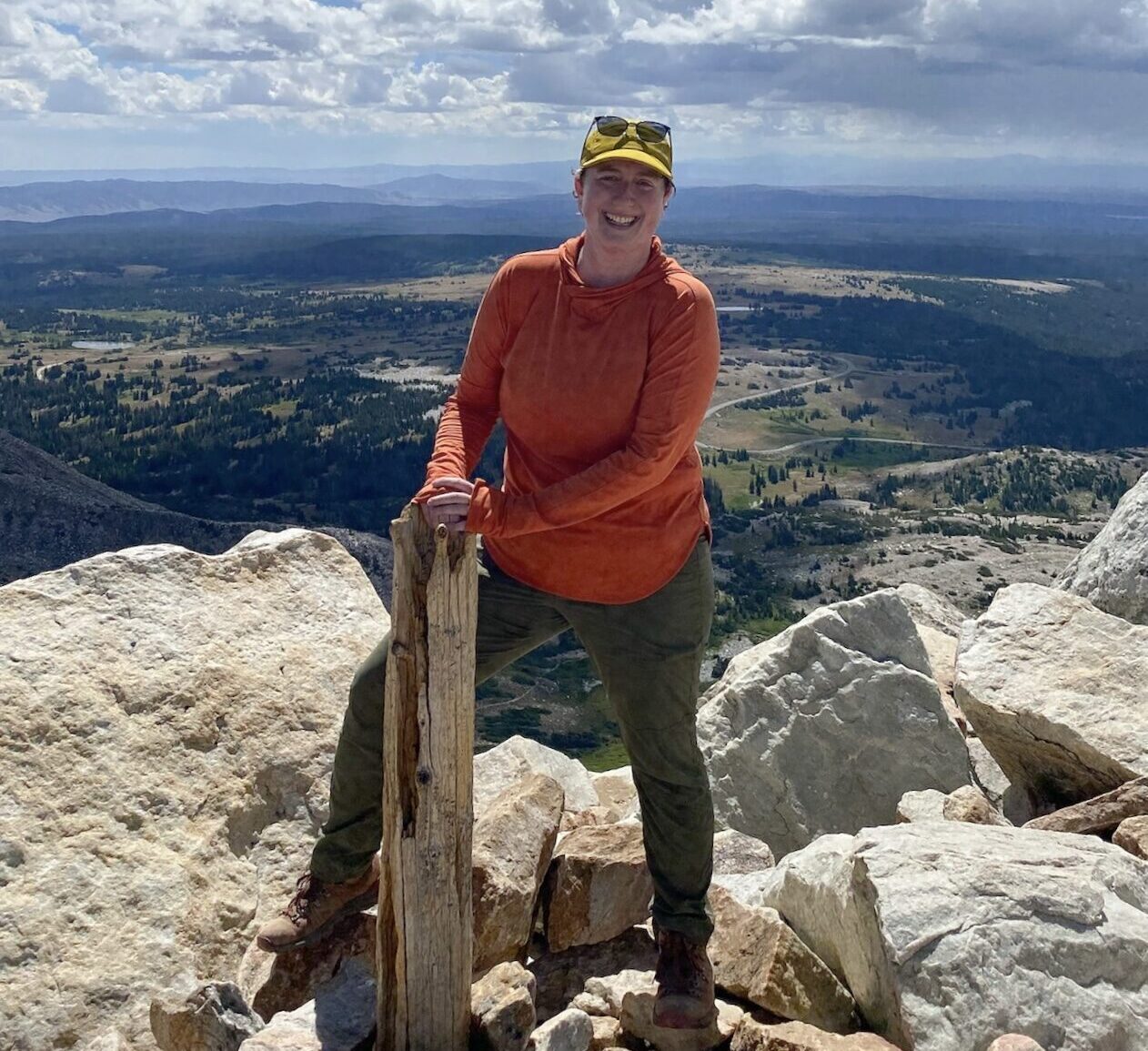
Jordan attended the University of Minnesota, Twin Cities where she graduated with a B.S. in Astrophysics and a minor in English in 2020. She started as a graduate student at the University of Wyoming in the fall of 2020. She has since earned her M.S. in Physics with a concentration in Astronomy and is currently working toward a PhD. Jordan loves the dark, open skies of Laramie, as well as the incredible access to hiking trails and backpacking/camping areas.
— JORDAN’S RESEARCH —
Jordan’s graduate research focuses on investigating the nearby (i.e., within our Milky Way galaxy) Interstellar Medium (ISM). The ISM is all of the gas and dust between stellar systems in the galaxy. Because the ISM is everywhere, no matter which direction a telescope is pointed, many astronomers usually have to remove its effects from their observations of other objects in the background.
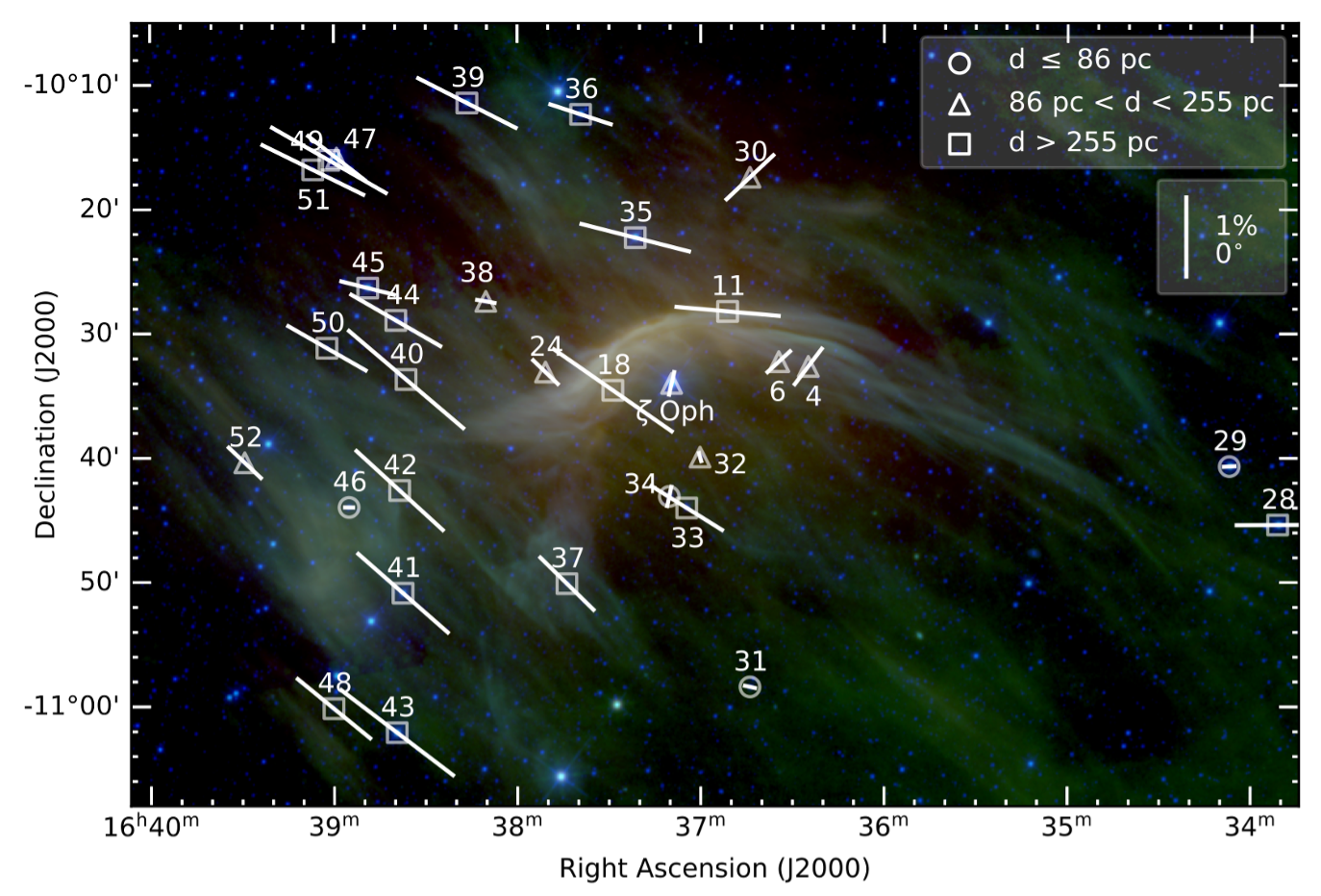
Image of a dust cloud in the ISM that Jordan studies. The labeled objects represent measurements of polarization, which in turn show the strength and direction of the magnetic field in the cloud.
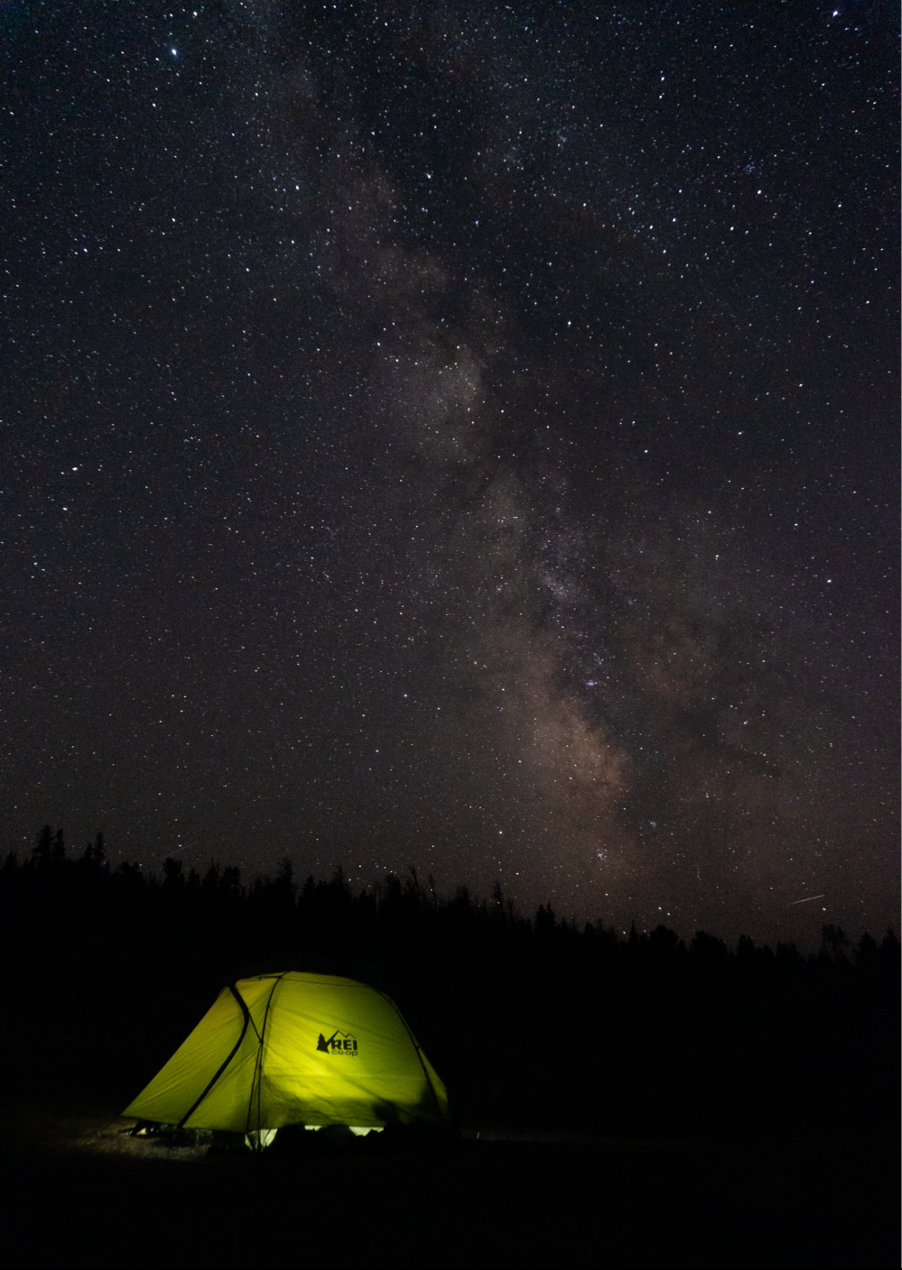
Jordan took this photo of the Milky Way while backpacking in the Wind River Range.
However, the ISM is fascinating all on its own! Jordan’s research focuses primarily on dust grains, microscopic particles pervasive throughout the ISM, and their interactions with the surrounding environment. Light passing through clouds of dust will appear, to an observer on the other side of the cloud, redder than when it entered. This is the same process through which the sky is blue and a sunset appears red. The light will also appear polarized, as the dust grains interact with their local magnetic field to create a sort of polarizing filter, similar to those in polarized sunglasses. By leveraging these two phenomena, both separately and in conjunction, Jordan investigates the nature of the observed dust grains and their ambient magnetic field.
ABOUT STUDENT HIGHLIGHTS
Every year, we award fellowships to graduate and undergraduate students attending the University of Wyoming or Wyoming’s community colleges in order to provide them with funding to engage in real-world research opportunities. Occasionally, we feature one of these students and their research on this blog. For more information about our student fellowships, visit our College Programs page.